










[ad_1]
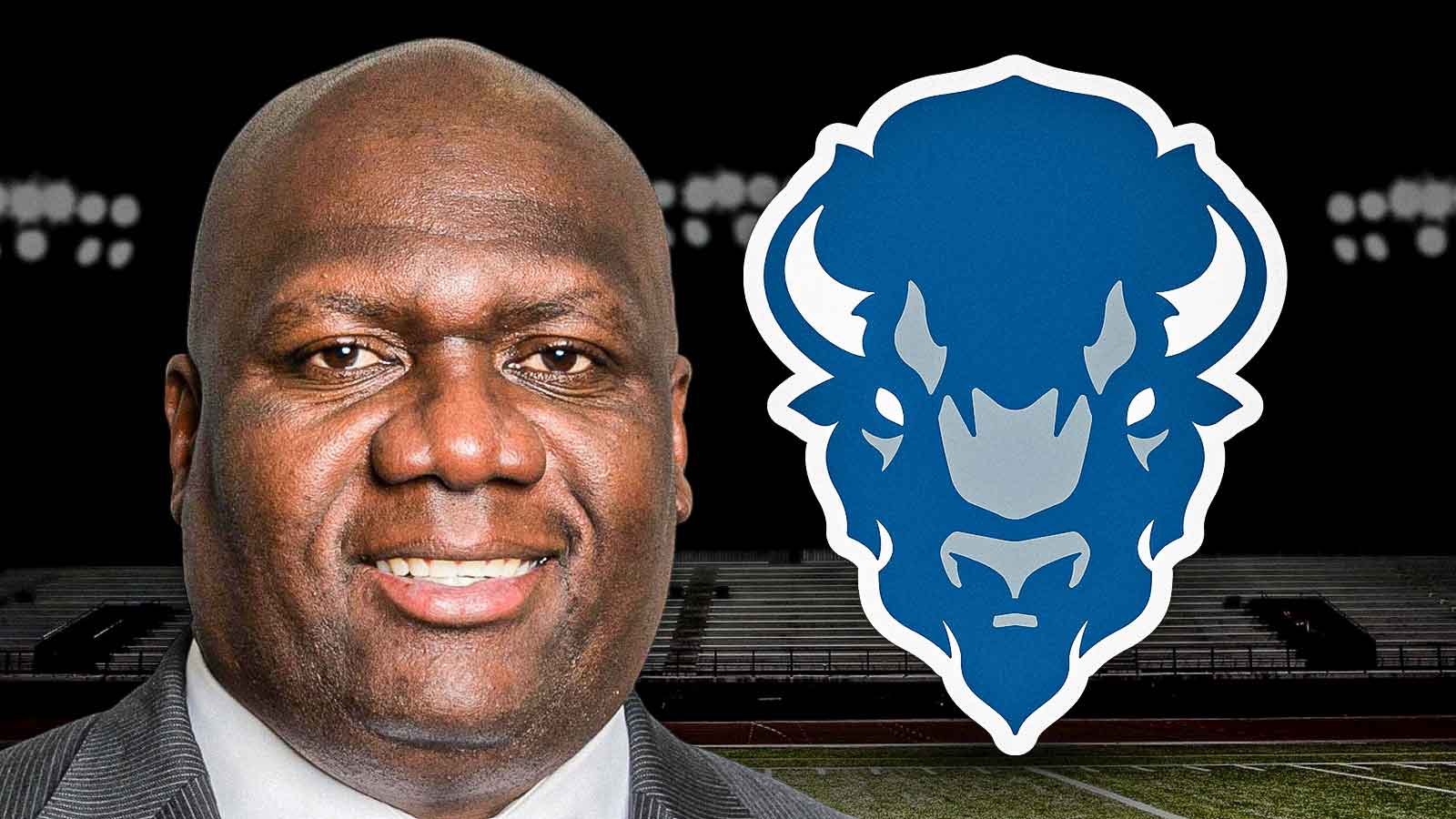
The expectations surrounding Howard University football under Ted White entering the 2026 season extend well beyond wins and losses. After White, a program legend, returned to his alma mater as head coach following Larry Scott’s departure to Auburn, he’s centered his philosophy as head coach on developing young men just as much as football players.
Howard enters the season looking to rebound from a 5-7 campaign in 2025, including a 2-3 record in MEAC play. The Bison showed flashes, defeating Morgan State 33-27 in overtime before ending the season with a convincing 44-15 victory over Norfolk State. However, a three-game losing streak against North Carolina Central, South Carolina State and Delaware State ultimately kept Howard from returning to championship contention.
That disappointing season marked a sharp contrast from just two years earlier, when Howard won the MEAC championship and advanced to the Celebration Bowl against Florida A&M. Now, White hopes to build the program back to that level. But if his offseason comments are any indication, his approach extends far beyond X’s and O’s.
Building football players by developing people
Throughout the offseason, White has emphasized that Howard’s development program isn’t limited to the weight room.
“This offseason, it was really important for these guys to get bigger, stronger and faster in the weight room,” White said on The Pivot. “But we also had media training for our guys. We had alumni come in and teach our guys how to put together a résumé. We talked to our guys about mental-health awareness, dealing with peer pressure and understanding a structured schedule. We also talked to our guys about how to interview for a job.”
White echoed that philosophy during a conversation with Black College Sports Network, explaining that Howard intentionally built an offseason curriculum around preparing players for life after football. It included media training, mental-health education, résumé preparation and interview skills rather than focusing exclusively on football development.
That philosophy reflects White’s belief that football careers eventually come to an end.
“It’s important for me to give these guys the skills they can have to win football games, but we all know this game has an expiration date. We’ve got to prepare these kids for the game of life.”
The HBCU coaching difference
White also believes coaching at an HBCU requires far more than designing game plans.
“At HBCU ball, you’re not always going to get the best player. There are some great coaches in HBCU football because you’ve got to be developers. Not only do you have to be the coach, you’ve got to be the dad, the counselor and the advisor. That’s what makes HBCU football so special.”
It’s a perspective shared by many HBCU coaches, but White’s comments offer insight into why player relationships remain central to his program. That relationship-first approach was evident from the beginning of his tenure. Rather than introducing himself only to players, White held his first team meeting with both players and their parents.
White did that dual approach because he wanted everyone connected to the program to understand who he was and why returning to Howard mattered so deeply.
Selling the Howard experience
In an era dominated by NIL and the transfer portal, White understands Howard can’t always compete with Power Four programs through facilities alone. Instead, he’s selling something different.
“We sell them on the experience. Howard University is in the middle of Washington, D.C. We have an opportunity to not only develop you as a football player but develop you as a young man,” White said on The Pivot. “When you’re talking about HBCUs, no, we’re not going to have the best facilities. But what you can sell them on is the experience. What you can sell them on is the long-term game—the game of life, being able to succeed for yourself and being able to provide for your family.”
That philosophy isn’t new for White. During his Black College Sports Network conversation, he recalled that he knew little about Howard before Doug Williams encouraged him to visit. White said he canceled every remaining recruiting trip after seeing Howard’s vision firsthand, a decision he still considers one of the best of his life.
Adapting to modern college football
White also recognizes that roster management has fundamentally changed.
“You have to develop your entire team now. Usually, you had a couple of guys who were good, and you knew that freshman may redshirt. Now you can’t do that. You’ve got to develop your entire team because even that starter may leave.”
He added, “You’ve got to be expecting that your team is going to change from year to year. That’s why the experience and the relationship base have to take effect with the coach.”
Chasing championships despite outside expectations
Howard was picked near the bottom of the preseason MEAC projections, but White has made it clear those predictions won’t define his team.
“We’ve always lived in the moment of controlling what you can control. Preseason predictions don’t necessarily mean anything to us as a program. Postgame predictions, that’s what we’re worried about,” White told the Black College Sports Network.
In fact, White believes low expectations remove pressure from his players while giving them additional motivation. His championship aspirations remain unchanged.
“We want to start in Atlanta, and we want to finish in Atlanta. That’s always been the goal.”
If Howard returns to championship contention, White hopes it will be because the culture he has built off the field becomes just as impactful as what happens between the lines.
The expectations surrounding Howard University football under Ted White entering the 2026 season extend well beyond wins and losses. After White, a program legend, returned to his alma mater as head coach following Larry Scott’s departure to Auburn, he’s centered his philosophy as head coach on developing young men just as much as football players.
[ad_2]
Source link