















[ad_1]

Alabama State University has accepted NCAA sanctions stemming from the eligibility records of former Hornets running back Jacory Croskey-Merritt. But university leaders say the penalties highlight what they believe is an inconsistent application of NCAA enforcement.
On Tuesday, the NCAA Division I Committee on Infractions classified Alabama State’s case as Level I-Mitigated, a reduction from the more severe aggravated classification. The university was assessed a minimum financial penalty of $30,000 plus 1% of its football program budget, along with three years of probation. The case stems from Croskey-Merritt’s 2019 season at Alabama State.
The university maintained that Croskey-Merritt appeared in only four games, preserving his redshirt season. However, conflicting participation records emerged after another Alabama State player reportedly wore Croskey-Merritt’s No. 21 jersey during other games, leading official statistics to indicate that Croskey-Merritt had appeared in as many as eight contests.
The NCAA’s investigation ultimately concluded that a former Alabama State sports information director altered one student-athlete’s competition statistics on the athletics website during the 2019 season, allegedly at the direction of the former head football coach. However, the Committee also determined the case did not involve a lack of institutional control or failure to monitor.
Alabama State Vice President and Director of Athletics Dr. Jason Cable said the university believed the ruling should have been reduced even further.
“The Committee’s reduction confirms what we have maintained from the outset — this case was improperly elevated,” Cable said. “The underlying conduct, tied to the former Sports Information Director and head coach, simply does not justify placement among the most severe cases in collegiate athletics. While we recognize the adjustment, we firmly believe the record supports a further reduction.”
University President Dr. Quinton T. Ross Jr. focused much of his response on what he described as a disparity between Alabama State’s punishment and the NCAA’s handling of the University of Arizona, which certified Croskey-Merritt’s eligibility before the 2024 season.
“While today’s decision is a downgrade from the Level I aggravated classification, we still believe that the scope of penalty does not reflect the university involvement or non-participation in this matter,” Ross said.
Ross also questioned why Arizona received a substantially lighter penalty.
“Equally concerning is the clear inconsistency in how this case was treated compared to similarly situated institutions. The University of Arizona, the institution responsible for certifying the student-athlete’s eligibility, and the entity that received the competitive benefit was issued a Level III violation and a $500 fine. In contrast, Alabama State University, which neither certified the student-athlete nor received any competitive advantage, was assigned a Level I violation.”
He added, “This outcome reflects a significant disparity. The certifying institution received a minor infraction, while Alabama State was assigned one of the NCAA’s most serious classifications. We believe the standards should be applied consistently across all institutions, and this case underscores the importance of fairness and accountability throughout the NCAA governance process.”
Croskey-Merritt spent four seasons at Alabama State, including the COVID-19 season, rushing for 1,164 yards and 13 touchdowns in 31 games. He transferred to New Mexico in 2023 and enjoyed a breakout season, rushing for 1,190 yards and 17 touchdowns while helping establish himself as one of the Mountain West’s top running backs.
Following that season, Croskey-Merritt transferred to Arizona, where he rushed for 106 yards and a touchdown against New Mexico in the Wildcats’ season opener before eligibility questions related to his 2019 participation records sidelined him for the remainder of the season.
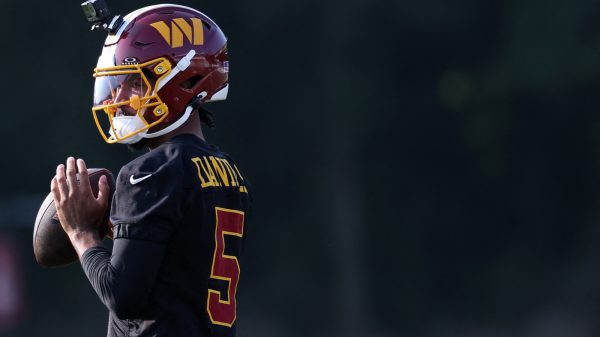
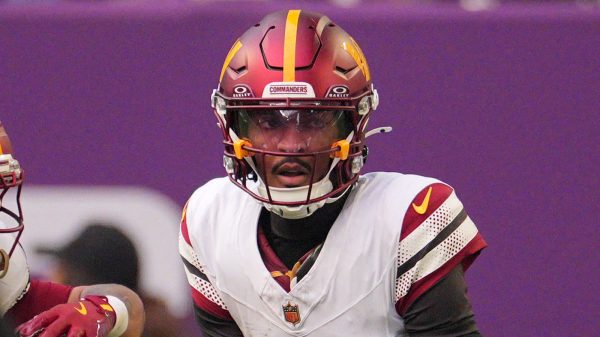
Despite appearing in only one game for Arizona, Croskey-Merritt entered the 2025 NFL Draft and was selected by the Washington Commanders in the seventh round with the 255th overall pick. He went on to rush for 805 yards and eight touchdowns during his rookie season.
Although Alabama State disagrees with aspects of the NCAA’s decision, the university said it will not appeal. The school has already implemented revised statistical-reporting protocols, enhanced audit procedures, expanded postgame review procedures and additional compliance education, and will now begin serving its probationary period.
Alabama State University has accepted NCAA sanctions stemming from the eligibility records of former Hornets running back Jacory Croskey-Merritt. But university leaders say the penalties highlight what they believe is an inconsistent application of NCAA enforcement.
[ad_2]
Source link