









[ad_1]
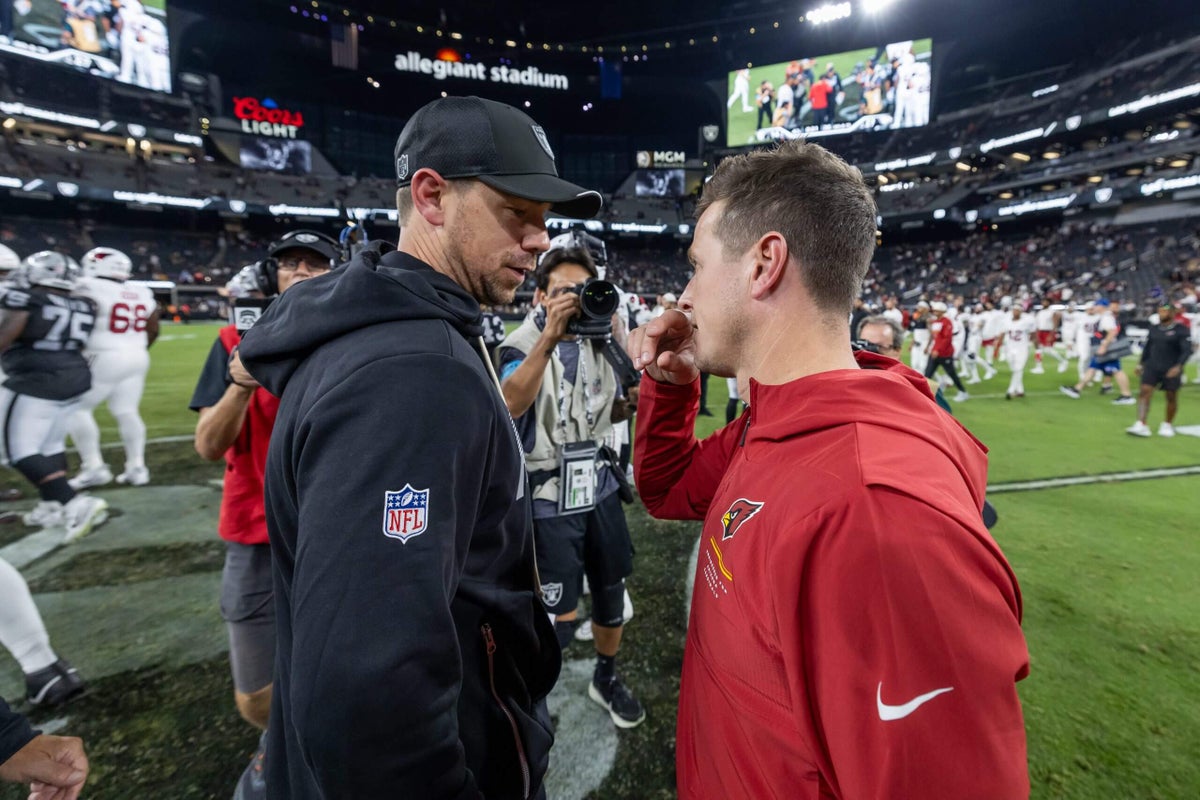
When rookie NFL head coaches Mike LaFleur, Joe Brady, Jeff Hafley, Jesse Minter and Klint Kubiak began laying the foundations for their inaugural campaigns by mapping out day-to-day operations, offseason conditioning and practice schedules, and more, they did so with advice passed on from mentors echoing in the backs of their minds.
But it didn’t take long for these coaches to realize that in addition to authenticity and strong communication skills, success as a head coach would also require great flexibility.
In Part 2 of our roundtable-style Q&A with the quintet, we learn about the unexpected twists and turns each encountered during the offseason, how those experiences helped prepare the coaches for the regular season, and what advice the men would share with someone in their shoes if asked for direction by a peer a year from now.
Questions and answers have been lightly edited for length. (In case you missed it, Part 1 published Monday and can be found here).
What was the biggest curveball you got hit with during OTAs and/or minicamps, and how did you adjust?
LaFleur: They said it was going to be hot out here (in Arizona). It was hot! So, it’s not just plug-and-play L.A. style. It’s not just plug-and-play San Francisco. Like, it’s a different weather pattern out here, and that’s the reason that we do our training camp here at State Farm (Stadium). … I knew it’s hot, but I really didn’t totally know because we had kind of a mild spring except for that last, like, week or so of OTAs, and so, it was just, “Hey, let’s get our work in outside, let’s be efficient with it, and then if we got to go do our last period inside — walk-through stuff like that on the turf just to get them out of that heat.” But I’m glad that curveball happened in OTAs, because we’ll experience that heat the first five or six weeks of the season.
Brady: Just making sure the entire building understands that this isn’t Year 10. It’s Year 1. It’s probably easier for other first-time head coaches when they walk into a building that no one knows them, but for myself, I walk into a building and there can be a sense of comfort in a way for a lot of people across the building of, “Hey, we know Joe,” and making sure that there’s daily reminders that we’ve never done this stuff together, and this is Year 1. You might be here for 10 years already, or just like me, I’ve been here for five years, but it’s our first time going through things.
Minter: Dealing with injuries and things like that that pop up. You try for that perfect balance of what’s best for the player, what’s best for the team, handling those types of situations while trying to keep things really private to protect the player, particularly in the offseason when you’re not needing to share all that type of information. I don’t know that that was, like, a curveball, but it was definitely something that happens more than I was probably anticipating.
Hafley: If I look back at my last two years being back in the NFL and OTAs, you’re so locked in on the defense, and probably not as concerned as the head coach is about all the rules and the regulations and the physicality of practice and the contact and what you can and can’t do. Which I just found myself not so much locked in on the defense, but on the overall big picture. I wanted to make sure that everything was done within the rules, the way we practiced, the contact that was allowed in practice. … So I’m not sure if that was a curveball, but it was definitely something that I kind of smirked about, thinking back to (Packers coach) Matt (LaFleur) coming in saying, “Hey, man, we got to slow it down,” and in the back of my mind, I’m like: “Slow it down? What are we doing?” Now, I’m like: “Hey, guys, we got to slow this down. We’re going too fast.” So the seat changes and your mindset changes.
Kubiak: It’s just worrying about the tempo of the practice, worrying about the health of the players that you’re coaching. You know the practice guidelines that the NFL gives you. It’s being worried about losing a practice or losing a draft pick based on the tempo getting too out of control. It definitely is not a fun part of the job but a necessary part of the job.
Coaches often use that break between minicamp and training camp to recharge, but also to assess their methods and approaches to those offseason practices. What was an encouraging takeaway, and what was a needs-improvement aspect that you applied at training camp and will use in the regular season?
Minter: The encouraging takeaway was just that we had a lot of guys show up. We had a lot of guys buy into how we were operating. (There were) some slight differences to what had been done before. So I was encouraged just by the eagerness of the guys and the willingness and wanting to feel something different. And for (improvement), just the ability to get the messaging through the locker room. That’s something I’ve got to continue to work on, and then the connection piece with all the players. In the offseason, you’re almost feeling each other out. … After that, it’s rehashing that to go into training camp, and you really have real opportunities to build relationships so it’s not just coach speak. Actually making the time and putting in the time for us to really get to know each other, trust each other, feeling like that connection will certainly go a long way.
Hafley: I really liked the way our staff connected with their players. I liked the way the staff worked. And as I thought about that in the offseason, it was just a really good reminder to me that: “You hired these guys. You’ve got to trust these guys. You’ve got to delegate to these guys. You’ve got to let these guys be themselves. You’ve got really good coaches, and there’s times I’m going to have to push them, and there’s times I’m going to have to make sure everything is my vision. But I’ve got to trust these guys to do their job.” And it’s just a good reminder, as I look back at it, of how proud I was this offseason of these coaches and how I’m excited to see them go the rest of the way.

Like several of the rookie head coaches, Miami’s Jeff Hafley has made sure to embrace the idea of trusting the staff he has hired. (Amber Searls / Imagn Images)
Kubiak: On the break, it was just a lot of going back and rewatching all your cut-ups because you’re new to the roster. You’re getting to know these players, and you just want to make sure that come the fall, you’re putting them in the best position to be successful. So just watching the tape and making sure you’re doing the right things with them on the field, and that you’ve got guys in the right spot, so when you script training camp that you’re not wasting time putting guys in position of doing things you’re not going to ask them to do in the season.
LaFleur: I felt good about a lot of things. I love the guys that we get to work with, both the coaches and the players. I loved our flow in terms of when we’re meeting (offensively), defense is lifting; meeting/lift swaps. I like just kind of the urgency that those guys went about what we were asking them to do, so that that stuff was all great. … And just kind of reflecting on, I need to remember: “Hey, you’re the head coach, but again, you were hired because you’re an offensive coordinator, and don’t lose sight of that. We have got to move the ball forward and trust (defensive coordinator) Nick (Rallis), trust (Michael Ghobrial) and our special teams. They’re going to do their job, and they’re capable of being really, really good and having really, really good units. Don’t overthink this thing, just be yourself, but also pour into the offense. Make sure that that ball’s moving forward.”
Brady: In each phase that we did, I would send out (a survey) to coaches and performance staff, and (replies) would be strictly anonymous, and the document allowed me to get information about the things that they liked and some tough questions, too. I don’t have all the answers, but I’m asking coaches. Let’s not wait until we win a lot of games or we lose a lot of games to be like, “Well, it was because of this.” And so after Phase 1, it’s like, “Hey, what did we like about what we did?” And then Phase 2, Phase 3; through it all. And then as we go into the offseason, it was like, “Hey, let’s make sure when we run this type of meeting here, this is how much time we kind of go.” For a lot of people, the anonymous surveys might sound a little corny, but it was good for me because people are able to say stuff to me that they might not say to my face, and I wanted that. I encouraged that, and it was awesome for me.
You mentioned the best piece of advice that you had received (in Part 1). What’s another valuable bit of knowledge that you would pass on to a rookie head coach next year?
Minter: Two things: Be really diligent in hiring your staff. It’s easy to hire people that you might know, that you might have worked for, but really making sure that the leadership positions on the coaching staff align philosophically with yourself, how they coach, how they teach, how they connect with players, how they operate, making sure that those positions can sometimes counterbalance maybe strengths and weaknesses of yourself, but at the same time have a consistent identity and theme throughout that you’re trying to build your team and that identity. And then I would again just echo: You’re in this position because you’ve done really good things. You’ve earned the right, and to double down on who you are. Be yourself. Let the team feel your personality. That’s what got you here. Be really good at what got you here. Be great if you’re an offensive guy. Be a great offensive guy. Defensive guy. Be a great defensive guy. Double down on the things that got you in that position.
Hafley: I would just tell him to be yourself. Don’t try to be me. Don’t try to be the guy who was your head coach before you. Take what you learn from other people. I get it. It’s going to happen. You’re going to hear those voices come out in your head as you go. That happened to me, but remember who you are. Be true to yourself and be true to who you are and what you believe in, because when things get hard, you’ve got to be honest with yourself, and that’s going to shine. Don’t try to be anybody else but yourself. It’s why you put yourself in this situation. It’s why you got the job.
Kubiak: The main thing is having a staff of guys that you trust and you want to go to war with, and they’re gonna have your back. I’m really confident in the group of guys that we have. It’s just there’s just so much to get. You just want to have guys that will echo your message, challenge their players, and make the players better. And so don’t rush through the hiring process would be the advice.
Brady: All I can do is speak on my experience up to this point, right? I haven’t called a game, played a game, but I think (it would be), “Don’t think any detail is too small to communicate.” I think over-communication is critical. … Sometimes, I go into a team meeting and say, “Do I need to hit them with this?” But if I have to ask myself the question, I probably do, because I’ll be mad at myself if it shows up later down the line. So, I think over-communication early and show them consistently what the standard is and what it’s not, and don’t just assume.
LaFleur: You got that opportunity for a reason, and just be you. You have learned philosophies from the people that you worked under, people that you worked with, but you’re not them. You are who you are. … If it’s not authentic, people are going to see through it. You’re at the highest of highs right now. Whether it be the people that we are across from in the interview or the 53- or 90-man roster, guys can see right through bulls—. So just be yourself and approach it like that.
Buffalo Bills beat writer Joe Buscaglia contributed to this report.
[ad_2]
Source link